[RFC] The OPEN Universe & Rules Upgrade v1.1

1. RFC summary

The Open Stablecoin Index $OPEN (www.openstablecoinindex.com) is not a traditional index product. There are no central middlemen (company, CEO, etc.). It is a decentralized experiment in open and verifiable smart contract systems where community coordination and self-improving design may evolve, though no outcome is guaranteed.

RFC Objectives:

  • Introduce the OPEN Universe whitelist to establish a transparent community registry separating project qualification from index composition.
  • Replace subjective governance with OPEN Rules that use quantitative, credibly neutral metrics for liquidity, efficiency, and growth.
  • Transition from static index equal-weighting to adaptive parameters that follow OPEN Rules

2. Problem:

OPEN is currently an equal-weighted onchain index of 10 stablecoin-network governance tokens (e.g. AAVE, CRV, RSR, FXN, etc.). Currently, inclusion in the OPEN index is subjectively decided by vlSQUILL holder votes, introducing fairness and quality concerns. This also adds administrative friction and reduces appeal for CEX listings and strategic partners that prioritize decentralized, credibly neutral assets. See ex1 and ex2 for step-by-step of the historical friction and underlying concerns.

While OPEN’s current equal-weighting index methodology is straightforward, it overlooks meaningful differences in value, growth, and liquidity among constituents. As OPEN’s TVL grows, this blind spot can obscure emerging opportunities and create mint or redemption inefficiencies when basket weights diverge from market liquidity.

3. Proposed solution

The idea is to make the index more rules based and predictable, whilst also engaging governance more regularly. It separates the subjective / procedural question of whether the token fits the bill from the actual index composition. It introduces a new concept of the OPEN Universe whitelist which is more expansive than the index. It also forces focus on quantitative criteria, the OPEN Rules, for inclusion. This also aims to protect against governance attacks and make the index less risky as collateral.

3a. OPEN Universe: proposed whitelisting process

An RFC + Snapshot vote can be raised anytime to add/remove a project from the OPEN Universe. The Universe is essentially a whitelist of approved tokens that vlSQUILL governance believes have the right qualities.

  1. 1d [Anyone] submit the Universe whitelist application & post the 18-field receipt (auto-emailed back to you) to the public RFC
  2. ~1d [OPEN] adds project to Universe dashboard + RFC
  3. 5d [vlSQUILL] discusses, debates, challenges RFC in public
  4. ~1d [OPEN] initiates vlSQUILL Snapshot vote
  5. 3d [vlSQUILL] Snapshot vote Y or N

To educate the community about $OPEN and its constituent protocols, a consistent, easy to use and implement KnowledgeBase is needed. The Universe whitelisting application hits three goals at once: whitelist applications, building the KnowledgeBase, and standardizing RFCs.

The OPEN community runs on part-time volunteer energy, not VC capital. Tools will begin as a lean MVP and improve through iteration and automation.

3b. OPEN Rules: proposed methodology

Currently, $OPEN is equal-weighted. We propose a new, quantitative weighting model adjustable by vlSQUILL holders. Parameters can be added, removed, or rebalanced through governance to fine-tune exposure across liquidity, growth, and value dimensions.

At OPEN rebalance time, the index is updated with Universe tokens according to previously agreed quantitative parameters below. and a vlSQUILL onchain vote ratifies this.

Parameters:

The initial proposed methodology parameters are:

  • Multi factor index weighting:
    • 20% Liquidity efficiency, metric: constituent token DEX Liquidity as % of OPEN’s TVL
    • 60% Project efficiency, metric: TVL as % of FDV
    • 20% Growth velocity, metric: Y-o-Y TVL growth
  • Target index constituents: up to 10
  • Rebalance frequency: quarterly
  • Component weight Max/Min band: If a component exceeds 40% or drops below 1% between rebalances, governance may propose weight changes, additions, or removals to maintain index health

Liquidity Efficiency
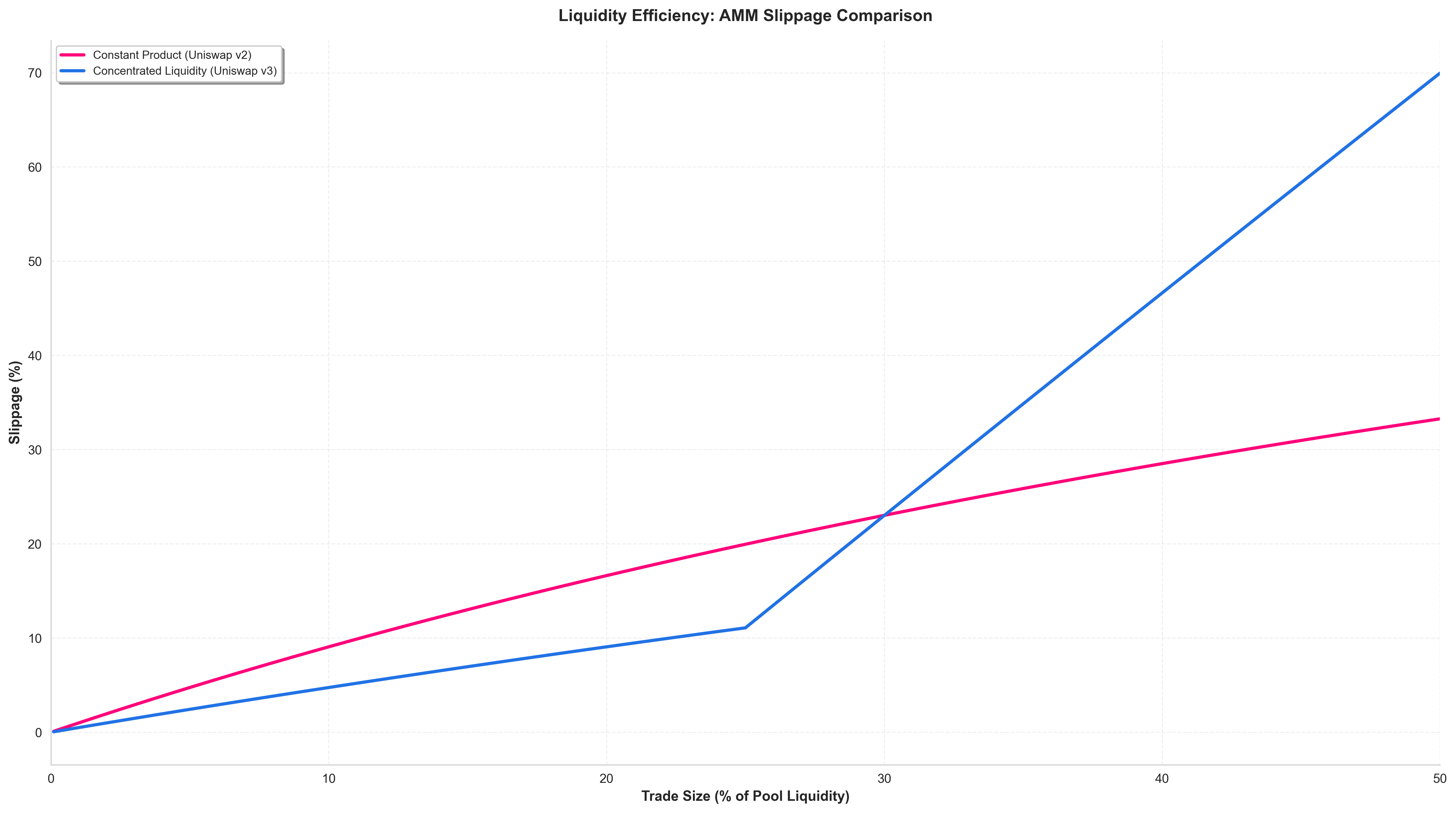
Measured as constituent DEX liquidity relative to OPEN index TVL size, this metric ensures smooth rebalancing operations and minimises execution costs. Analysis shows that slippage increases non-linearly with trade size across different AMM designs. Concentrated liquidity (Uniswap v3) substantially improves on constant product AMMs by focusing liquidity within specific price ranges.
Project Efficiency
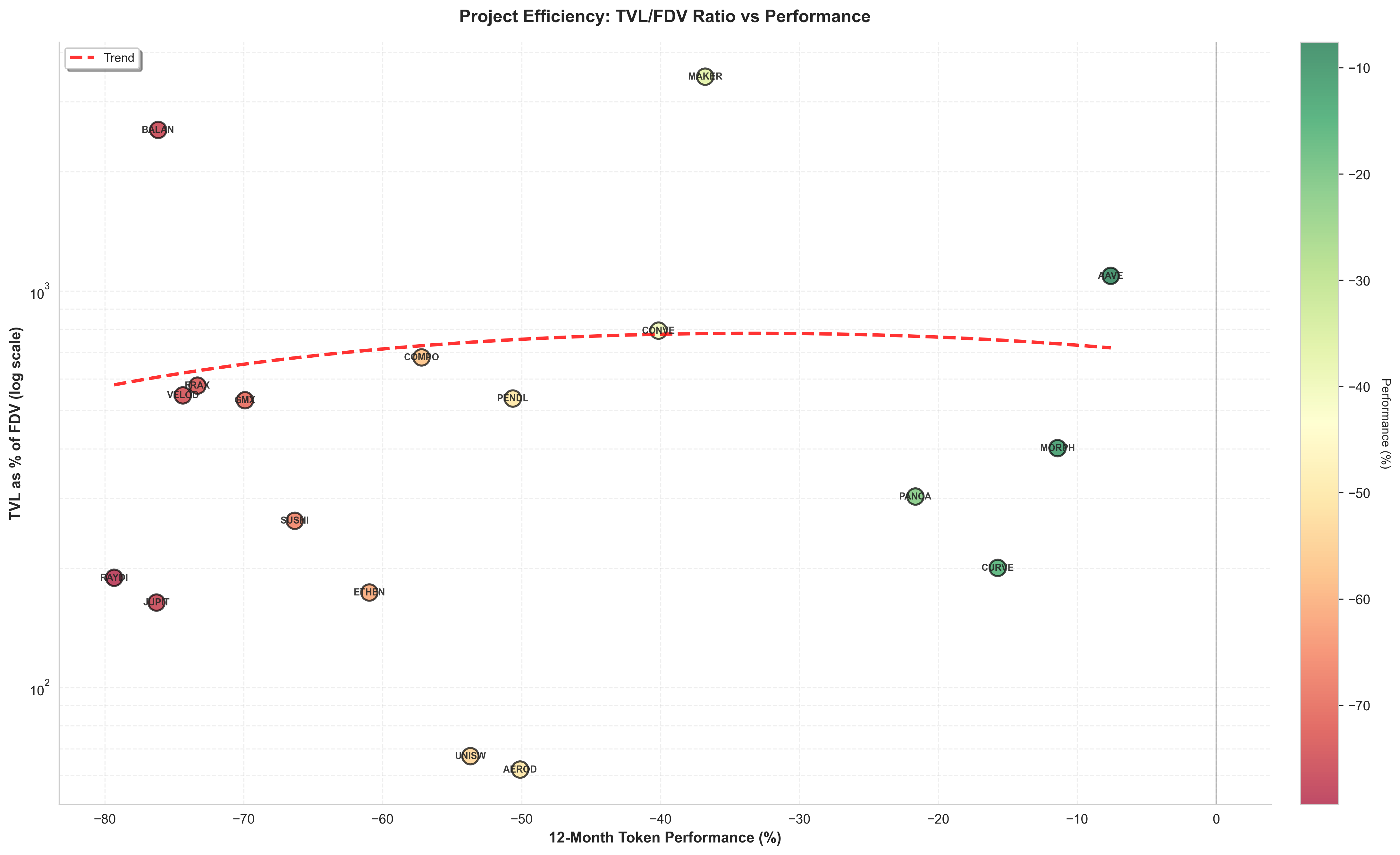
The TVL/FDV ratio serves as a primary metric for project quality and sustainability, warranting the highest 60% allocation. Analysis demonstrates a minor positive correlation between high TVL/FDV ratios and 12-month token performance.

Projects with low TVL high FDV is a sign of actual or perceived project inefficiency and low value. It may be actually inefficient and lower value, if circulating supply is high. It may be perceived inefficient and lower value if circulating supply is low, which creates a first impression metrics-legibility issue among other concerns.
Growth Velocity
Measured by year-on-year TVL growth, this captures momentum and expanding adoption of stablecoin protocols. Analysis reveals significant correlation between 30-day TVL growth and token price performance, with growth acceleration providing additional predictive power. Balancing growth velocity against the conservative project efficiency metric allows the index to capture upside from emerging leaders whilst maintaining a foundation in established protocols with proven fundamentals.

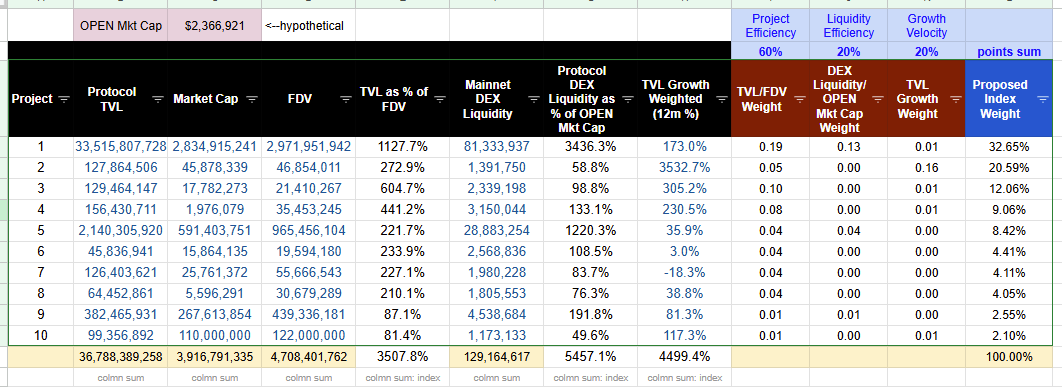
Table 1: Conceptual index basket illustrated:
Link to inspect spreadsheet formulas.

Anyone can make a proposal to modify OPEN indexing weights or add/remove variables.

4. Targeted success metrics after 12 months

If the proposal is accepted, OPEN aspires to the following.

  • 6+ OPEN Universe whitelisting proposals submitted per year
  • 2+ data-back-tested OPEN Rules proposals per year improving methodology, parameters, or weighting.
  • 20%+ vlSQUILL participation rate per proposal
  • 15%+ increase in unique voter participation per year
  • OPEN index Y-o-Y growth outperforms ETH and COIN50
  • No successful governance attacks

5. Closing: before and after comparison

Table 2: Summary of the proposed changes.

We welcome your questions and feedback.

Any proposed changes in the comments are invited to include actionable supporting data or analysis from the contributor. Please include any concerning attack vectors for this approach in your RFC comments. Counter proposals from the community are also invited.

Thank you for considering.

5 Likes

Looking good. One thing that’s missing is which source(s) will be used to get the stats for the weighting. Different sources might give different values, so it could lead to infighting if it’s left up to interpretation

3 Likes

The AAVE DAO/Labs drama is making me rethink whether TVL/FDV ratio is a clean proxy for project efficiency. If both entities are not aligned and Labs is funneling money from the DAO then TVL doesn’t say much about potential profits directed to the token. Ideally we should be using (unincentivized) DAO Revenue/FDV, or if those numbers are too hard to come by then we could keep TVL/FDV but add an additional “team/DAO alignment” factor to the weighting that penalizes these sorts of ownership fights

1 Like

@safetydancer
Good suggestions on authorized sources for stats. Which readily available sources do you suggest for each data input?

With no core team or capital dedicated to OPEN (a community volunteer project), it’s helpful if we use the best options that are easily available and most trusted.

AAVE DAO happenings in last several days are quite interesting indeed. Intrigued to see how this plays out but suggest not pre judging.

The proposal makes sense. I’m curious about the impact of growth velocity as newly funded bootstrapping projects can have crazy growth for a couple of months and then just vanish in the oblivion. Should they be added to the index even if it’s for two quarters? I don’t know. I guess keeping a 20% weight is conservative enough.

For TVL and YoY TVL growth I would say the most trusted/least controversial source is Defillama. For FDV I would go with Coingecko, and for DEX liquidity I would choose Dexscreener.

What you mean by “pre-judging”? Aave Labs has already unilaterally redirected an income source to themselves with the router change from Paraswap to Cowswap, and they are drawing a very hard line between “protocol” and “product” which reveals that their intentions going forward will be to focus on product revenue rather than protocol. The very fact that Aave is by far the most successful project of the index yet it has the highest TVL/FDV ratio signals that investors are not feeling so confident about the AAVE token

1 Like

Agreed. The whitelist could have a project lindyness check of maybe 6 months or 1 year

1 Like

Confirming data sources @safetydancer:

  • TVL: DefiLlama
  • Market Cap: CoinGecko
  • FDV: CoinGecko
  • DEX Liquidity: DexScreener or if complete, then manual direct-checks on Curve, Uniswap, Balancer and SushiSwap

Agree @cyrille, a 20% Growth Velocity lower-weight intends to keep new and mature projects fairly weighted through the same lens. vlSQUILL governance can recalibrate later if we find its working poorly.

@safetydancer on TVL/FDV and the Aave ecosystem, a few observations:

  • The current Aave community dissent remains under active debate. Outcomes might evolve over months as pressure and data accumulate.
  • Markets may reprice Aave TVL and FDV up or down as signals clarify, which will be captured in TVL/FDV ratio. Community governance can respond accordingly
  • A high TVL/FDV ratio is a proxy for project efficiency, and can signal a Buffett-style value play - how do you see it when applied to any project? Aave’s elevated ratio predates recent ecosystem issues. That said, if this metric or its weighting for project efficiency feels flawed, please propose a substitute and we can put it to a vote.

Like to kick off the Snapshot vote around Dec 27 with a three-day voting window.
We can always revisit and refine in a few months as experience and data accumulates.
Thanks to everyone who weighed in and helped cross the Ts and dot the Is.

1 Like

The point is that having both a token and equity is always going to be bad for the token long term, no matter how any specific fight resolves.

A high TVL/FDV ratio is indeed a proxy for project efficiency IF value is only accruing to one token. But if there’s more than one entity profiting from this TVL then the lower than expected FDV means people are betting on the non-token entity to keeping winning and muscling out the token entity.

Imo Aave’s high TVL/FDV predating the recent drama doesn’t say much because the token/equity question has been lingering there from the start. Before this ruckus there was the Horizon token thing etc.

Agree though that using any other metric would be laborious and messy. To attempt a partial fix to the problem I would add a fourth “team alignment” parameter to the weighting. It could be a simple unambiguous check:

  • Project has only one token to which all profits flow = gud
  • Project has multiple tokens with vague ownership and rights = bad
  • Project has both token and equity = real bad (equity is stronger because it has legal rights and the token doesn’t)
1 Like

Agree with the sentiment @safetydancer however the implementation you describe will need to be scoped on how the work gets done every month, who owns doing it, etc. given the volunteer nature (and no dedicated team) of the OPEN project.

Think we should Snapshot vote Y or N on v1.1 methodology (the proposed scope in this RFC above), and if Y then implement. Subsequently, start looking at the true ownership concern you raise for the v1.2 upgrade. Its a serious issue, playing out real time and affecting far more than Aave.

We are heartened by the forthcoming Aragon ownership dashboard as well as potentially something similar from DefiLlama. Also looking into other ways to do this work but those answers are months away.

So this is a decision to make a few inches of progress now or remain stalled with current methodology limitations + marketing/comms on hold for several months while seeing who is going volunteer to scope, build community support and own the workstream.

Will put up the v1.1 vote and follow the action chosen by vlSQUILL governors. If we can flush out v1.2 faster than I suggest above then that would be a teriific bonus for us all.

1 Like

This RFC has moved to a Snapshot vote:
https://snapshot.box/#/s:openindex.eth/proposal/0x80228c88532abd9f4f2ce27fdce1bdfa21839db277033c27ca46a595a79cfa20

Snapshot is live for 72 hours of voting on OPEN Universe & Rules Upgrade v1.1.

TLDR, adopting this vote will:

  1. Introduce the OPEN Universe whitelist to establish a transparent community registry separating project qualification from index composition.
  2. Replace subjective governance with OPEN Rules that use quantitative, credibly neutral metrics for liquidity, efficiency, and growth.
  3. Transition from static index equal-weighting to adaptive parameters that follow OPEN Rules

Rejecting this vote, will retain OPEN’s genesis methodology.

Voting ends Monday Dec 29, 2025 · 10:46 AM (California) / 1:46 PM (New York)

This RFC includes the Jan 2026 OPEN rebalance to finalize v1.1 Rules implementation.

The embedded table illustrates the index target weights for the Jan 2026 rebalance.

The rebalance math can be inspected in the v3 Metrics file on Tab 1, V6:AA20.

The tokens listed as “current” in v3 Metrics column F are the current constituents of the OPEN index and eligible for the Q1 2026 rebalance.

Other protocols may apply for OPEN Universe whitelisting in the future. Approval requires vlSQUILL governance consent. OPEN index inclusion depends on OPEN Rules ranking at rebalance.

The link to onchain voting to approve the rebalance is included here, voting starts in 24 hours.

1 Like